Three stories that spoke to me in 2021

Octavia Butler – Kindred

Kindred – Octavia Butler

Octavia Butler was an absolute trailblazer in science fiction; a genre that when she was young had a distinct lack of female protagonists, as well as a lazy approach to writing about ethnicity and class. However, labeling Octavia Butler a science fiction writer does her a disservice, as it makes people who “don’t like science fiction” unlikely to pick up her books.
Kindred is an incredibly gripping story that blends time travel, slavery, feminism, complex characters and excellent storytelling. It brings to life the long shadow of slavery and power dynamics that existed and that persist over American society today. The book defies general genre-placing, and is in the words of Butler herself, it’s “kind of a grim fantasy”.

Pitchaya Subanthad – Bangkok Wakes to Rain
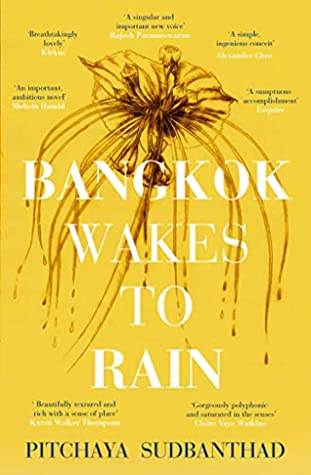
Bangkok Wakes to Rain – Pitchaya Subanthad

The sublimely interlinked and carefully crafted narrative arc of the different protagonists in Bangkok Wakes to Rain is subtle and beautiful. Similar to The Man with the Compound Eyes (on my 2020 favourites list) it addresses climate change obliquely through the effects that it has on Bangkok. It takes us into a future where the flooded remnants of “Old Bangkok” is used to examine our sense of home and how we shape and retain memories of places and who we are. It is an incredibly human book, bringing its characters to life with complexity and tenderness.

Min Jin Lee – Pachinko
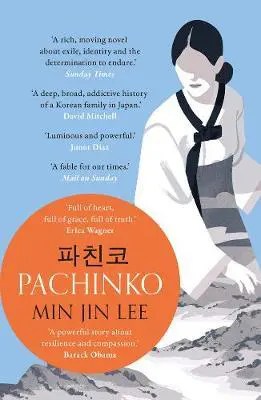
Pachinko – Min Jin Lee

The family story and experience set out in Pachinko takes us from 1910 through to 1989 across Korea and Japan. Through one family’s eyes, we experiences racism and stereotypes encountered by Koreans in Japan. It is an epic historical fiction, covering both the annexation of Korea by Japan, and WWII. Power dynamics, love, history unfolding and our freedom to make decisions within our lifetime are all big themes that are tackled beautifully.

What stories have spoken to you recently?

“[Pity that] consequences are determined not by excuses but by actions!”

This is a quote I come back to regularly, from George Eliot’s Adam Bede. The context of the quote is in wrongdoing, where one character has behaved badly and is looking for redeeming factors, thinking “if ever a man had excuses, he had”.

When I originally encountered this quote, I wrote it down because I liked the turn of phrase. When I remembered it several years later, it resonated because I had recently been treated horribly by someone I really cared for. That person apologised, but it made no difference to the outcome – or to my feelings – and I found the quote perfectly summed that up and provided me with some comfort.

Fast forward, and the meaning of this quote has changed for me. The original association with wrongdoing is all but gone, and I now see it as a call to action: consequences are determined by what you do. if you truly want something, you take steps to get there. There will always be excuses or reasons you can’t do something (I don’t have time, I’m tired, I don’t know enough), but growth happens outside of your comfort zone, and making excuses to stay in that comfort zone won’t get you where you want to be. So call out your own excuses and get going.

And on the flipside of that, you are allowed to not do something, whether you give yourself “excuses” or not. If I choose to not do something, that is also an action, and that action will have consequences, positive or negative: I might be more rested with a clearer head, or feel like I missed out.

I’m using the quote as a balancer what is it I’m enabling and working towards with my actions, and are they – however imperfectly – taking me towards that?

With my second public post in two days, I’d like to think so!

My 2020 Four Favourite Fiction Reads

2020 has drawn to a close, and I surprisingly found myself having read half the number of books I read last year, despite the extra “free time” ostensibly available.
 
I read intensely in January and February, then only one book March-May, at the height of the UK lockdown. With the restrictions in place, I spent much more time making sure I moved, taking care of our little garden, baking sourdough bread (yes, really) and generally trying to move around whenever I wasn’t at my desk. 
 
As I was allowed into the gym again, my reading also picked up. With London now back in lockdown (#3), I’m again mindful that I keep moving but also to keep reading this time!
 

The Overstory – Richard Powers (USA)
A reminder of the sheer beauty and majestic presence of trees.

The Man with the Compound Eyes, Ming-Yi Wu (Taiwan)
An allegory of environmental destruction, loss, and love.

The Memory Police, Yoko Ogawa (Japan)
A discombobulating story of collective memory and grief, evocative of Rachel Carson’s Silent Spring, and uncomfortably close to our society’s ecological shifting baseline syndrome.

Redemption in Indigo, Karen Lord (Barbados)
A pure bundle of fire-cracking joy, reminding me of how much colour and life you can pack into black and white paper pages.

 
Taking recommendations for 2021!